
If you’re reading this, there’s a good chance you’re doing a very specific kind of mental math right now: “I know I need help… but how do I start alcohol outpatient treatment and still keep my job?”
We get it. A lot of people wait way longer than they need to because work feels like the one non-negotiable. Mortgage, rent, kids, deadlines, reputation, benefits. Real life. No shame in that.
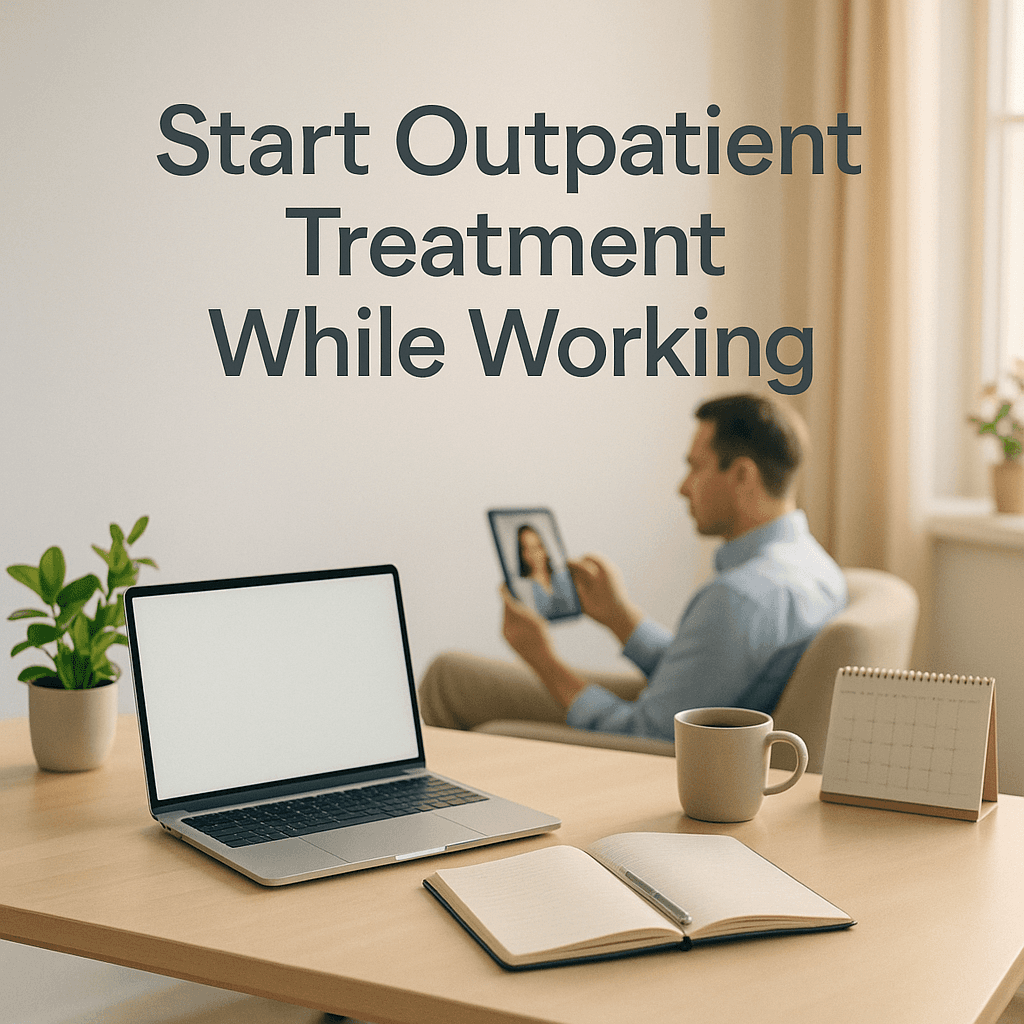
The good news is that outpatient alcohol treatment is designed for people who have responsibilities. You can get real support, real structure, and real clinical care while still showing up for your life. It just takes a plan.
We’re Eleven Eleven, a clinically grounded, peer-supported outpatient center in San Clemente. We help people with alcoholism, substance use, and dual-diagnosis mental health challenges through a full continuum of outpatient care, including PHP (Partial Hospitalization Program), IOP (Intensive Outpatient Program), and OP (Outpatient Program). We don’t do on-site residential or detox, but we do help guide and place clients into those higher levels of care when needed, then support them as they step back down into outpatient.
Here’s how to start outpatient treatment while working, without blowing up your entire life.
Step 1: Get honest about what “while working” really means
A lot of people say they want treatment “that doesn’t affect work at all.”
Totally understandable. But the truth is, recovery usually asks for some adjustments.
A better goal is this:
- Keep your job protected as much as possible
- Reduce stress and chaos fast
- Create a schedule you can actually maintain
- Start building a life that doesn’t require alcohol to get through the day
Outpatient treatment can fit around work, but it works best when you’re willing to shift a few things (even small ones) so you’re not trying to heal in the leftover scraps of your day.
For those struggling with severe alcoholism or substance use issues, it’s crucial to consider alcohol rehab options that provide comprehensive support. Our center offers such programs tailored to individual needs.
And if you’re worried about the logistics of seeking treatment while managing work commitments, we also provide guidance on traveling for treatment, ensuring that your journey towards recovery doesn’t disrupt your professional life too much.
Step 2: Figure out whether outpatient is the right starting point (and be open to stepping up)
Before you commit to any schedule, you want the right level of care. Outpatient is powerful, but it’s not the right first stop for everyone.
Outpatient may be a good fit if you:
- Aren’t experiencing dangerous withdrawal symptoms
- Can reliably show up to sessions sober
- Have a stable living environment (or at least a safe place to sleep)
- Can manage cravings with support and structure
- Are motivated, even if you’re scared
You may need a higher level of care first if you:
- Drink daily and can’t stop without getting shaky, sweating, anxious, or sick
- Have a history of seizures, delirium tremens (DTs), or severe withdrawal
- Black out frequently or drink in the morning
- Have suicidal thoughts, psychosis, or severe mental health symptoms
- Keep trying outpatient-style solutions but relapse quickly
Because we don’t provide on-site detox or residential, we act as a bridge when that’s what’s clinically appropriate. If detox or residential is the safest move, we’ll help you get positioned into the right program, then we’ll be here in San Clemente to support your outpatient step-down so you can keep momentum.
If you’re not sure where you fall, that’s normal. You don’t have to diagnose yourself. That’s what a proper assessment is for.
Step 3: Understand the outpatient options (PHP, IOP, OP) in real-life terms
Let’s translate the acronyms into what they usually feel like day-to-day.
PHP (Partial Hospitalization Program)
Think of PHP as a strong, structured reset while still living at home. It’s more hours per week and more clinical support.
This can be a good fit if:
- You need a big change fast
- Your drinking has started affecting work performance or attendance
- Your mental health is spiking (anxiety, depression, panic, trauma symptoms)
- You’re early in sobriety and need extra structure
Some people work while doing PHP, but it typically requires a flexible job or protected time off. If working full-time is truly non-negotiable, IOP is often the more realistic starting point, but we’ll help you make that call clinically, not just logistically.
IOP (Intensive Outpatient Program)
This is the “I’m serious about recovery, and I still need to function in my life” level for many working adults.
IOP is built for:
- People who need more than weekly therapy
- People who want group support plus clinical structure
- People who can’t step away from work for residential or PHP
It’s intense enough to create change, but flexible enough to work around many schedules.
OP (Outpatient Program)
OP is usually a step-down level or support for ongoing stability.
This can be great if:
- You’ve built a foundation and want to maintain it
- You’re balancing work, family, and recovery long-term
- You want continued accountability and support
One important note: “less intensive” doesn’t mean “less important.” OP is where many people solidify their new normal.
Step 4: Pick a start date and stop waiting for the “perfect time”
There is almost never a perfect time to start treatment for substance abuse.
Work will always have a busy season. Family will always have needs. There will always be a birthday, trip, presentation, or stressful week.
What we tell people is simple: if alcohol is costing you peace, health, relationships, or self-respect, starting sooner is usually kinder than starting later.
If you’re worried about missing work, consider this too:
Most people lose more time to hangovers, anxiety, poor sleep, panic, and damage control than they would ever lose to treatment. In fact, recovery tends to give you your time back.
Step 5: Have the work conversation (without oversharing)
This is one of the biggest stress points, so let’s make it practical.
You generally have three paths:
Option A: Tell your employer you’re starting treatment
You do not have to share details. You can keep it simple and professional:
- “I’m addressing a health issue and will need a consistent schedule for appointments.”
- “I’m starting a medically supported treatment plan and will need time blocked off.”
- “I’m working with healthcare providers and will provide any required documentation.”
If you have a supportive manager or HR department, this can reduce pressure and help protect your schedule.
Option B: Tell HR only (not your direct manager)
Some people prefer privacy and keep the details with HR. That can be especially helpful if your manager is not exactly known for compassion.
Regardless of the path you choose, it’s essential to remember that seeking help through an addiction treatment center or exploring various treatment services can significantly improve your situation. Whether it’s through drug treatment centers or other forms of treatment, taking that first step is crucial.
In case you’re considering how to approach this conversation with your employer about needing leave for treatment, resources like the ones provided by the Department of Labor can offer valuable guidance.
Option C: Say nothing and build your schedule quietly
This works for some people, especially in OP or certain IOP schedules, but it can get stressful if you’re constantly making excuses.
If you’re trying to keep it private, we usually encourage you to at least have one “cover story” that is true-ish and sustainable, like “recurring medical appointments.” The key is consistency and not creating a second life of lies. Recovery is hard enough.
Step 6: Know your rights: sick time, protected leave, and confidentiality
We can’t give legal advice, but we can tell you what many working adults use when starting treatment:
- Paid sick time or PTO
- A short medical leave of absence
- FMLA (Family and Medical Leave Act), if you qualify
- Short-term disability in some situations
Many people are shocked to learn that treatment can be handled like any other healthcare need, and that your job may have processes to protect privacy.
If you’re afraid that starting treatment will “ruin your career,” please hear this: untreated alcoholism is far more likely to ruin your career than getting help.
Step 7: Plan your first two weeks like you’re protecting a new habit (because you are)
The beginning is the most tender stage. Motivation is high, but your brain and body are still adjusting.
A few things that help working professionals a lot:
Put recovery on the calendar like meetings you can’t move
If it’s optional, it becomes optional. We want it to be normal.
Simplify everything that isn’t essential
This might mean:
- Saying no to extra projects for a couple weeks
- Eating basic meals
- Doing fewer social plans
- Skipping events where alcohol is the main activity
This is not “being dramatic.” This is protecting your nervous system while you stabilize.
Build a “stress exit plan” for the workday
If cravings hit at 4:30 pm, you want a plan before 4:30 pm.
Examples:
- A short walk before driving home
- Calling a supportive person on the way home
- A non-alcohol drink you actually enjoy waiting at home
- A meeting or group session scheduled for your usual trigger time
Step 8: Prepare for the biggest work-related triggers (and don’t pretend they won’t happen)
Working life comes with built-in drinking culture triggers:
- Client dinners and networking events
- Office happy hours
- Sales pressure and performance anxiety
- High stress and constant availability
- Work travel and hotel isolation
- “Reward drinking” after a long week
Outpatient treatment helps you build strategies that actually work in the real world, like:
- What to say when someone offers you a drink
- How to leave early without making it weird
- How to manage anxiety without “taking the edge off”
- How to recover from a tough day without spiraling
This is one of the biggest benefits of outpatient: you practice new skills in real time, not in a bubble.
Step 9: If you’re dealing with anxiety, depression, or trauma, treat that too (not “later”)
A lot of high-functioning professionals drink for reasons that make total sense:
- Anxiety that never turns off
- Depression that feels flat and hopeless
- Trauma symptoms that spike at night
- Perfectionism and burnout
- Panic, insomnia, racing thoughts
If mental health is part of your story, you’re not “too complicated.” You’re actually very common.
We specialize in dual-diagnosis treatment, which means we look at the full picture, not just the alcohol. When the underlying mental health piece is treated with real clinical support, staying sober often becomes less of a daily fight.
Step 10: Expect the “but I’m not that bad” thoughts (and don’t let them drive)
This one shows up for almost everyone who is still working:
- “I haven’t gotten a DUI.”
- “I’m not drinking in the morning.”
- “I’m still performing.”
- “Other people drink more than me.”
Here’s a gentler question:
Is alcohol making your life smaller, messier, more anxious, or more painful than it needs to be?
You don’t have to hit a dramatic rock bottom to deserve support. You can choose a higher-quality life now.
A simple checklist to start outpatient treatment while working
If you want a quick, concrete plan, here it is:
- Schedule an assessment to determine the right level of care (PHP, IOP, OP).
- Be honest about withdrawal risk and daily drinking patterns. Safety first.
- Choose a start date and treat it like a real commitment.
- Decide what you’ll tell work, if anything, and keep it simple.
- Block your schedule and protect treatment times like meetings.
- Reduce high-risk social events for the first few weeks.
- Build a daily support plan for cravings and stress.
- Track wins, even small ones (sleep, mood, hydration, focus, consistency).
What it’s like coming to our San Clemente outpatient center
We built Eleven Eleven to feel modern, calm, and supportive, because healing is hard enough without feeling like you’re walking into a cold, clinical box.
Our space in San Clemente has ocean views and a serene environment that helps people breathe again. But what matters most isn’t the view. It’s the combination of real clinical care and real peer support, delivered in a way that respects your life, your work, and your dignity.
We’ll meet you where you’re at, assess what you need, and help you build a plan that’s sustainable. And if it turns out you need detox or residential first, we’ll help guide you there and stay connected so you’re not trying to figure it all out alone.
Let’s make this easier: reach out to us today
If you’re trying to start alcohol outpatient treatment while working, you don’t have to solve the whole puzzle by yourself.
Reach out to Eleven Eleven at our San Clemente headquarters. We’ll talk through what’s going on, help you figure out the right level of care (PHP, IOP, or OP), and build a realistic schedule that supports your recovery without sacrificing your life.
When you’re ready, we’re here.
FAQs (Frequently Asked Questions)
Can I attend outpatient alcohol treatment while keeping my full-time job?
Yes, outpatient alcohol treatment is designed for people with responsibilities like work. Programs such as IOP (Intensive Outpatient Program) offer flexible schedules that allow you to receive real clinical support while maintaining your job. However, some adjustments to your routine may be necessary to effectively support your recovery.
How do I know if outpatient treatment is right for me or if I need a higher level of care?
Outpatient treatment may be suitable if you have a stable living environment, can attend sessions sober, and do not experience dangerous withdrawal symptoms. If you drink daily with severe withdrawal symptoms, have a history of seizures or delirium tremens, or experience severe mental health issues, a higher level of care like detox or residential treatment might be necessary. A proper clinical assessment can help determine the best starting point.
What are the differences between PHP, IOP, and OP in outpatient programs?
PHP (Partial Hospitalization Program) offers a strong, structured reset with more hours per week and is ideal for those needing significant support early in sobriety—though it often requires flexible work arrangements. IOP (Intensive Outpatient Program) provides intensive therapy and group support while allowing many to maintain their work schedule. OP (Outpatient Program) generally serves as a step-down level focused on ongoing stability and balancing recovery with life commitments.
Does Eleven Eleven Recovery provide residential or detox services on-site?
No, Eleven Eleven Recovery does not offer on-site residential or detox services. However, they assist clients by guiding and placing them into appropriate higher levels of care when needed and support them through their transition back into outpatient programs.
What should I realistically expect when trying to balance outpatient treatment and work?
Balancing outpatient treatment with work typically requires some adjustments to your schedule to reduce stress and create sustainable routines. While the goal is to protect your job as much as possible, recovery benefits from dedicating focused time rather than trying to heal only in leftover moments. Open communication with your employer and flexibility can facilitate this balance.
Is traveling for alcohol treatment an option if local programs conflict with my work schedule?
Yes, traveling for treatment can be an effective option when local programs don’t align well with your work commitments. Eleven Eleven Recovery offers guidance on traveling for treatment to ensure that your recovery journey minimizes disruption to your professional life while providing comprehensive support tailored to your needs.